Sei solo
Johann Sebastian Bach – Sonatas & Partitas for Solo Violin, with Four Voices
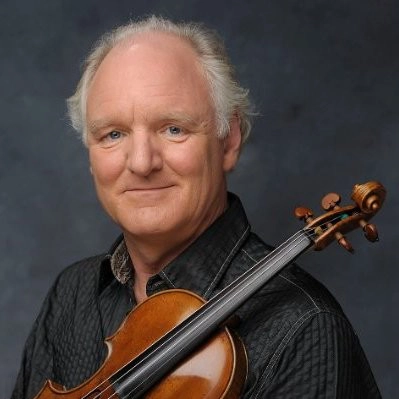
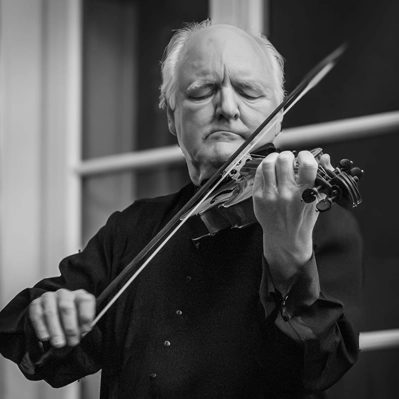
Since retiring from permanent orchestral duty in 2017, Radboud Oomens has concentrated entirely on realizing a long-held ambition: performing Bach’s six works for solo violin alongside four singers, who add the chorale quotations discovered by musicologist Prof. Dr. Helga Thoene – a violin-and-voice quintet built around a solo repertoire.
Discover Sei soloEnsemble
- Radboud OomensViolin
- Géraldine JeannotSoprano
- Maximin MarchandCountertenor
- François Isserel-SavaryTenor
- Johan RiphagenBass, arrangement
Programmes
Sei solo at Christmas
Sonata in G minor BWV 1001 · chorales and motet related to the Sonata in G minor · Chaconne in D minor BWV 1004
Sei solo at Easter
Sonata in A minor BWV 1003 · chorales, motet and mass related to the Sonata in A minor · Chaconne in D minor BWV 1004
Sei solo around the Partita in D minor
BWV 1004: Chorales and vocal partita related to the Partita in D minor · Partita in D minor BWV 1004: Allemanda, Corrente, Sarabanda, Giga, CIACCONA
Sei solo at Pentecost
Sonata in C major BWV 1005 · chorales and motet related to the Sonata in C major · Chaconne in D minor BWV 1004
A life built around the violin.
Born in Breda, Radboud Oomens studied under Professor Herman Krebbers at the Sweelinck Conservatorium in Amsterdam, graduating with the Prix d’Excellence in 1977. A concertmaster before the age of twenty, he later led the Württembergisches Kammerorchester and, from 1984, held a first violin position with the NDR Sinfonieorchester in Hamburg for over three decades. Alongside a distinguished orchestral career, he has built a parallel life in chamber music, teaching, and – since his retirement from permanent orchestral duty in 2017 – in a singular pursuit: Bach’s Sei solo, performed with four voices.
Radboud Oomens was born on 25 August 1953 in Breda. He began violin lessons in 1959 and, by nineteen, was already concertmaster of Het Gelders Orkest, appearing nationally as a soloist on radio and television. His studies with Professor Herman Krebbers at the Sweelinck Conservatorium culminated in the Prix d’Excellence in 1977.
In 1980 he moved to Heilbronn, Germany, to become concertmaster of the Württembergisches Kammerorchester, touring Europe, Asia, and the Americas. In 1984 he joined the NDR Sinfonieorchester in Hamburg as first violin – a position, later continued with the NDR Elbphilharmonie Orchester, that he held for over three decades until his final concert as a permanent member on 26 February 2017.
Chamber music has run alongside the orchestral career throughout: Trio Lipatti, the founding and direction of Trio Kairos (1991–1999, over 100 concerts), and duo recital work, notably with pianist Irina Kolesnikova since 2003. He has also taught extensively – on simultaneous playing, tutti technique, and audition preparation – at institutions including the Landesmusikakademie Rheinland-Pfalz and the Orchesterzentrum NRW.
Since retiring from permanent orchestral duty in 2017, he has concentrated on Sei solo – Bach’s sonatas and partitas for solo violin, performed together with four singers.
Career timeline
Born in Breda
Born on 25 August 1953 in Breda, the Netherlands.
- 1953
Born in Breda
Born on 25 August 1953 in Breda, the Netherlands.
- 1959
First violin lesson
Begins violin studies with H. Lenaerts in Eindhoven.
- 1965
Grammar school and conservatory
Begins grammar school alongside his studies at the Conservatorium Amsterdam.
- 1968
Main studies with Herman Krebbers
Starts his main studies with Prof. Herman Krebbers at the Muzieklyceum Amsterdam.
- 1971
First competition successes
Wins the Donemus Prize and the City of Amsterdam Prize at the Oscar Back Competition, while also completing his school-leaving examinations.
- 1973
Concertmaster at nineteen
Appointed first concertmaster of Het Gelders Orkest, appearing as soloist on national radio and television.
- 1977
Prix d’Excellence
Completes his studies with Professor Herman Krebbers at the Sweelinck Conservatorium Amsterdam with the Prix d’Excellence.
- 1980
Württembergisches Kammerorchester
Moves to Heilbronn, Germany, as concertmaster – concert tours across Europe, Asia, and the Americas follow.
- 1984
NDR Sinfonieorchester
Joins the NDR Sinfonieorchester in Hamburg as first violin – a position held for over three decades.
- 1991
Trio Kairos
Founds and leads Trio Kairos in Hamburg – more than 100 concerts across Germany and the Netherlands.
- 2007
Orchestral pedagogy
Begins masterclasses on specialised work within the violin section of a symphony or chamber orchestra, audition preparation, simultaneous playing, and tutti technique – at the Orchesterzentrum NRW, the Landesmusikakademie Engers and elsewhere. Member of the critical orchestra of the Hanns Eisler School of Music in Berlin for the further training of young conductors.
- 2017
Final concert, NDR Elbphilharmonie Orchester
Closes a permanent orchestral career on 26 February 2017 – Mahler’s Symphony No. 2 under Thomas Hengelbrock, in the newly opened Elbphilharmonie. The start of an intensive chamber music life in various international ensembles, especially in the south of France.
- 2026
Sei solo
Full concentration on Sei solo – Bach’s solo sonatas and partitas performed alongside four voices, after research by Prof. Dr. Helga Thoene.
Five centuries, one instrument.
J.S. Bach
Sonatas for Solo Violin I, II & III
J.S. Bach
Partitas I, II & III
J.S. Bach
Sonatas for Violin & Basso Continuo
H. Badings
Capriccio for Violin & Piano
B. Bartók
Romanian Folk Dances
L. v. Beethoven
Sonatas Op. 12 Nos. 1, 2, 3, Op. 47 “Kreutzer” & Op. 30 No. 3
L. v. Beethoven
Romances in G major & F major
J. Brahms
Sonatas Op. 78, 100 & 108
A. Corelli
Sonata Op. 5 No. 5
C. Debussy
Sonata for Violin & Piano
C. Franck
Sonata in A major
G. Frid
Sonata Op. 50 (1955)
E. Grieg
Sonata Op. 45 in C minor
O. van Hemel
Sonata No. 2 (1945)
P. Hindemith
Sonata Op. 11 No. 1
L. Janáček
Sonata for Violin & Piano
F. Kreisler
Danse Espagnole
J.-M. Leclair
Sonata Op. 9 No. 3 in D major
T. de Leeuw
Sonatine (1955)
F. Liszt
Benedictus & Offertorium (Hungarian Coronation Mass)
O. Messiaen
Thème et Variations
W. A. Mozart
Sonatas KV 304, 301, 376 & 526
S. Prokofiev
Cinq Mélodies
M. Ravel
Sonata Posthume
M. Ravel
Tzigane – Rhapsodie de Concert
C. Saint-Saëns
Havanaise
C. Saint-Saëns
Introduction et Rondo Capriccioso
A. Schnittke
Suite in the Old Style
F. Schubert
Grand Duo Op. 162 in A major
I. Stravinsky
Duo Concertant
I. Stravinsky
Suite Italienne
G. Valentini / O. Respighi
Sonata in G major
P. I. Tchaikovsky
Souvenir d’un lieu cher, Op. 42
G. Ph. Telemann
Fantasia No. 6 for Solo Violin TWV 40:19 in E minor
E. Ysaÿe
Sonata Op. 27 No. 3 “Ballade” for Solo Violin
“A string section can only become homogeneous through a clear, binding distribution of roles – and a very strong will.”
Orchestral thinking
Orchestra experience
Concertmaster and tutti positions since 1972, across chamber and symphony orchestras of every size.
Tutti playing
A clearly articulated view of how string sections achieve real homogeneity – through role, not just rehearsal.
Audition preparation
Simultaneous playing, solo repertoire, and orchestral excerpts, taught with a working musician’s precision.
Masterclasses
Regular teaching at institutions including the Landesmusikakademie Rheinland-Pfalz and Orchesterzentrum NRW.
Musical communication
How impulses travel through a section – from concertmaster, through desks, to every player’s bow.
Listen.
Duo Recital
Schubert / Brahms / Frid – Grand Duo Op. 162 · Sonata Op. 108 · Sonata Op. 50 · Audio unavailable
Trio Kairos – Debut Recording
Smetana / Shostakovich – Piano Trios · Audio unavailable
Baroque with Variations
Various Baroque Composers – Live recording, concert programme · Audio unavailable
Sei solo – Marseille
J.S. Bach – Sonata in C major BWV 1005 & Chaconne BWV 1004 · Audio unavailable
Impressions to explore.
Where the music travels next.
Upcoming
tba
To be announced soon
Past
25 Jun 2026
Église Saint-Michel, Villedieu
Sei solo IV — Partita No. 2 in D minor BWV 1004, with the chorale quotations discovered and edited by Johan Riphagen (world premiere)
France
Ensemble Sei solo
23 Nov 2025, 16:00
Temple Les Oblats, Cours Mirabeau, Aix-en-Provence
Sei solo III — Sonata in G minor BWV 1001, "Christ lag in Todesbanden" BWV 4, Chaconne BWV 1004
France
Ensemble Sei solo
22 Nov 2025, 19:00
Temple de Lourmarin, Lourmarin
Sei solo III — Sonata in G minor BWV 1001, "Christ lag in Todesbanden" BWV 4, Chaconne BWV 1004
France
Ensemble Sei solo
21 Nov 2025, 19:00
Église Saint-Michel, Villedieu
Sei solo III — Sonata in G minor BWV 1001, "Christ lag in Todesbanden" BWV 4, Chaconne BWV 1004
France
Ensemble Sei solo
29–31 Aug 2025
Festival Rencontres Inattendues, Tournai
Sei solo II (for Easter) — Sonata in a minor BWV 1003, chorale motets, Chaconne BWV 1004
Belgium
Ensemble Sei solo
3 Nov 2024, 17:00
Temple Les Oblats, Cours Mirabeau, Aix-en-Provence
Sei solo I — Sonata in C major BWV 1005, chorale motets, Chaconne BWV 1004
France
Ensemble Sei solo
Music continues.
Get in touch